Articles
Large diameter abrasive cutting wheels
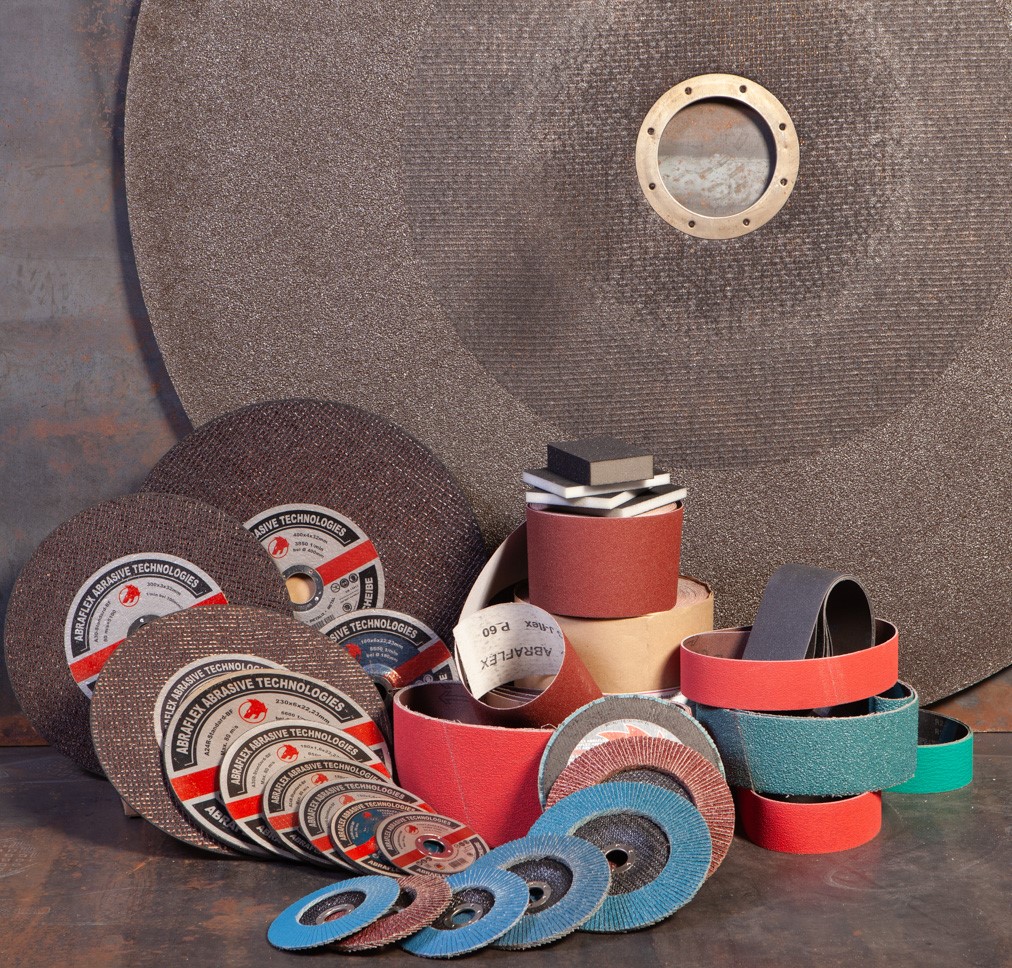
Cutting with abrasive wheels is the most versatile method. Abrasive cutting wheels easily cut all types of steel, including cast and rolled steel, non-ferrous alloys, special nickel- and titanium-based alloys, and other difficult-to-cut materials. In the steelmaking, forging, and rolling industries, abrasive cutting with large-diameter wheels (from 500 mm to 1800 mm) on stationary machines is widely used.Cutting wheels mainly consist of four components:
- Abrasive material. Typically, this can be fused alumina, zirconium oxide, or silicon carbide, or mixtures thereof. The choice of abrasive material depends on the material being processed. For example, fused alumina is typically used when processing steel, while zirconium oxide or a mixture of fused alumina and silicon carbide is used when processing stainless steel, difficult-to-machine materials, and materials characterized by increased strength and toughness. Silicon carbide is best suited for processing materials with low strength.
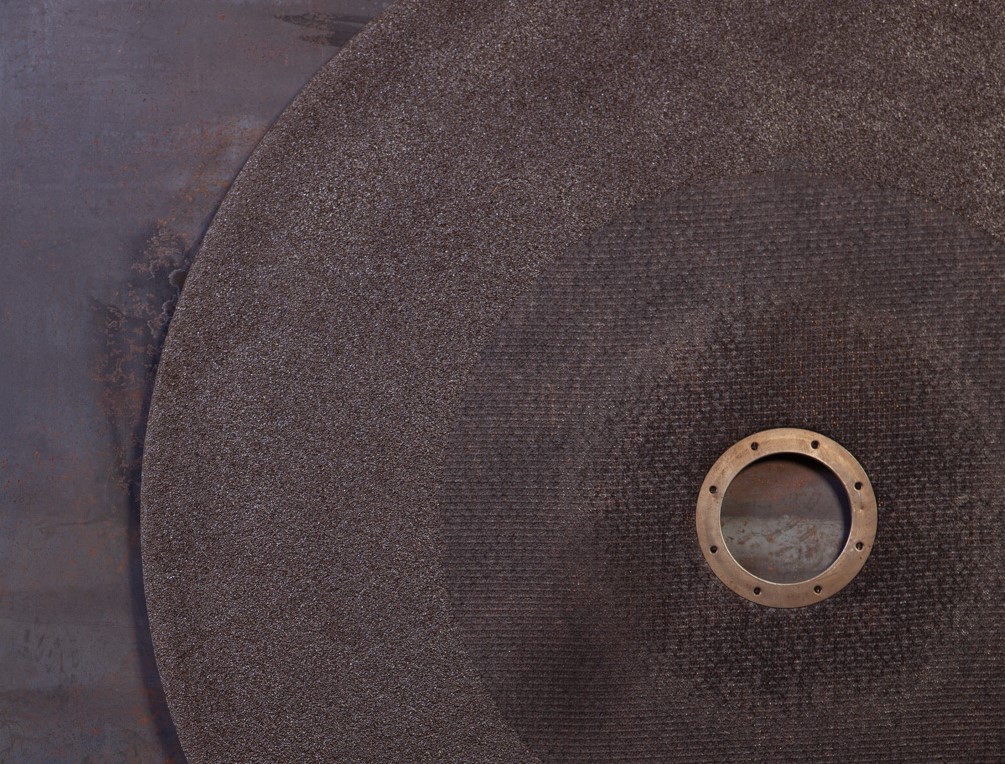
- Binder. Holds the abrasive grains together in the wheel. The most common type is bakelite resin. Reinforcing material. Provides stability, safety, and rigidity. The number of reinforcing layers directly depends on the diameter and height of the cutting wheel. Flange reinforcement is located near the mounting hole, where the density of the reinforcing layers is higher. This part of the wheel is not involved in cutting and is designed to significantly increase the wheel's rigidity and lateral stability. Active additives allow you to adjust the wheel's properties to achieve the desired balance of durability, productivity, and cutting quality.
Cutting wheels for stationary cutting can also differ in shape:
- Conical. The wheel's thickness decreases from the periphery to the center. Typically, when specifying the size of this type of wheel, two numbers are used in conjunction with the height. The first indicates the wheel's height at the periphery, and the second indicates the wheel's height at the mounting hole. The advantage of this wheel shape is reduced friction on the side surfaces during cutting, which is especially important when making deep cuts. Generally, all large-diameter wheels are conical.
- Straight wheel shape. A universal wheel shape. Suitable for most applications in the steel industry and steel construction.
- An undercut cutting wheel (the center of the wheel is recessed). It resembles the T27 wheel shape. The clamping flange and nut on this wheel shape do not protrude beyond the wheel's end face. This shape is especially useful in foundries for cutting sprues and risers.
The choice of wheel shape and diameter will also depend on the chosen cutting method. Cutting methods vary based on the position and relative movement of the cutting wheel and the workpiece:
- Vertical cutting. The most common method. Excellent for cutting individual workpieces. The wheel rotates and moves vertically in a radial direction across the entire cross-section of the workpiece in a single pass.
- Longitudinal cutting. Used for cutting stacks of several adjacent workpieces, thin flat workpieces, and sheet metal.
- Rotational cutting. Used for cutting large-diameter round pipes and solid blanks. During the cutting process, the wheel rotates at the cutting speed and moves vertically at the feed rate. The workpiece continuously rotates around its axis on a roller table. The advantage of this process is the ability to use smaller diameter wheels and, consequently, lower-power machines.
- Segment cutting. Similar to the previous rotary cutting method, it is used for large-diameter round solid workpieces. Unlike this method, the workpiece does not rotate continuously. The cutting process is divided into several stages. The workpiece is divided into several sectors depending on its size. During the cutting process, the wheel is fed to the full specified depth. This cuts a portion of the workpiece within a specific sector. The wheel is then fed outward, and the workpiece rotates into the next sector. The process is repeated.
- Pendulum cutting. The cutting wheel periodically cuts into the workpiece to a shallow depth with an additional forward and backward movement and longitudinal feed. This method has very low productivity. It is used for low-power machines or in cases where increased cutting quality is required and cooling is used.
The choice of wheel bond is largely influenced by the temperature of the metal being processed. This also affects cutting performance. Depending on the temperature of the workpiece, a distinction is made between cold, warm, and hot cutting:
- Cold cutting. Metal temperature below 100°C. Recommended cutting speed, depending on the material, ranges from 4 to 15 cm²/s.
- Warm cutting. Metal temperature from 100°C to 600°C. Recommended cutting speed from 8 to 20 cm²/s.
- Hot cutting. Metal temperature from 600°C to 1000°C. Recommended cutting performance from 15 to 35 cm²/s.
Finally, I'd like to mention the safety of using abrasive cut-off wheels. After all, they can be quite dangerous.
- Never exceed the tool's maximum rotation speed. This is always indicated on the wheel's label and is usually further indicated by a colored stripe on the wheel's label and packaging. A red stripe indicates a maximum speed of 80 m/s, while a green stripe indicates a maximum speed of 100 m/s.
- Transport and store cutting wheels, if possible, in the manufacturer's original packaging on a hard, level surface. Larger diameter wheels can be stored upright.
- When storing cutting wheels, avoid large temperature fluctuations, high humidity, and direct sunlight. Prolonged exposure to these factors can alter the properties and structural strength of the wheels.